
Create an Industry-leading
Manufacturer of Premium Quality
SPA Hot Tub
Manufacturer of Premium Quality
SPA Hot Tub
Views: 0 Author: Site Editor Publish Time: 2026-01-23 Origin: Site


Hot tubs offer relaxation, but electricity costs can be a concern. Understanding how much energy a jacuzzi hot tub uses each month is key to managing expenses. Factors like size, insulation, usage, and climate all play a role in energy consumption.
In this article, we’ll explore how to calculate monthly energy costs and share tips for reducing electricity usage while enjoying your jacuzzi hot tub.
Electricity consumption in a hot tub is affected by various factors, including:
● Ambient Temperature: In colder climates, maintaining a consistent water temperature requires more energy. On the other hand, hot tubs in warmer climates may consume less energy for heating.
● Insulation Quality: Well-insulated jacuzzi hot tubs are more energy-efficient because they retain heat better, reducing the need for constant heating.
● Usage Patterns: The more frequently the hot tub is used, the more electricity it will consume. Frequent heating cycles and long soak times will lead to higher energy consumption.
● Cover Effectiveness: A high-quality cover can significantly reduce heat loss and minimize the energy needed to keep the water warm.
Understanding how these factors influence your energy consumption can help you optimize your hot tub usage.
Factor | Impact on Electricity Use |
Ambient Temperature | Cold weather increases energy use by 50-100% |
Insulation Quality | Better insulation reduces energy consumption |
Cover Quality | A good cover can reduce energy use by 70% |
Frequency of Use | More frequent use increases energy consumption |
Temperature Settings | Higher temperatures increase energy use by 10-17% per degree |
When it comes to energy consumption in jacuzzi hot tubs, the heater is the largest contributor. The heater is responsible for maintaining the water temperature, and the more frequently it operates, the higher the electricity usage. Depending on the climate, the heater may need to work harder during colder months to maintain the desired temperature.
Pumps and Jets also consume electricity, though to a lesser extent. These components run whenever the water is circulating or when the jets are activated. Frequent use of jets can increase electricity usage, especially in models that feature high-powered jets.
Calculating how much electricity your jacuzzi hot tub uses involves a few simple steps:
1. Find the Wattage of Your Hot Tub: Check your hot tub’s manual or product specifications for its wattage. Most hot tubs use between 1,500 to 6,000 watts, depending on the model.
2. Estimate Your Usage: Determine how many hours you typically use your hot tub per day.
3. Convert Watts to Kilowatts: Divide the wattage by 1,000 to get the kilowatts (kW).
4. Calculate Daily kWh Usage: Multiply the kW by the number of hours the hot tub is in use each day.
5. Estimate Monthly Cost: Multiply the daily kWh usage by the number of days in a month, and then multiply by your local cost per kWh.
For example, if your hot tub uses 3 kWh per day, and your electricity rate is $0.12 per kWh, your monthly cost would be:
● 3 kWh x $0.12 x 30 days = $10.80 per month
Your local energy rate is a key factor in determining how much it costs to run your hot tub. To find out your rate, check your electricity bill for the cost per kWh. If you’re unsure, contact your utility provider for information on local energy rates. Some regions may also offer time-of-use pricing, which can be beneficial if you can operate your hot tub during off-peak hours.
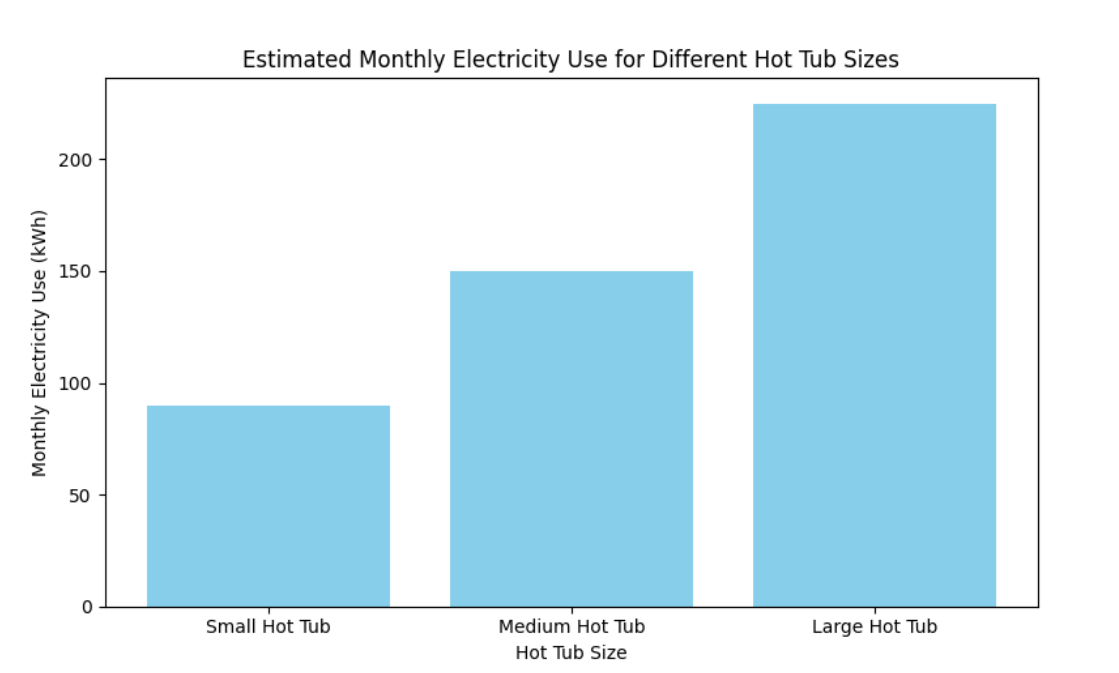
The monthly electricity consumption of a jacuzzi hot tub varies based on its size and model. On average, small hot tubs (2-4 person capacity) use around 90-130 kWh per month, medium hot tubs (4-6 person capacity) use approximately 130-180 kWh per month, and large hot tubs (6+ person capacity) may use 180-225 kWh or more.
These estimates are based on regular use and maintaining a consistent water temperature.
Energy consumption in jacuzzi hot tubs also varies by season:
● Winter: Cold weather requires the heater to work harder to maintain the water temperature. In regions where temperatures drop below freezing, energy use can increase by 50-100%.
● Summer: In warmer climates, hot tubs typically require less heating, reducing electricity consumption. During the summer, electricity use may drop by 30-50%.
By adjusting your usage patterns and managing the temperature, you can control seasonal variations in your energy consumption.
Hot Tub Size | Daily Usage (kWh) | Monthly Usage (kWh) | Estimated Monthly Cost (at $0.12/kWh) |
Small (2-4 people) | 3-5 kWh | 90-150 kWh | $10.80 - $18.00 |
Medium (4-6 people) | 5-6.5 kWh | 150-195 kWh | $18.00 - $23.40 |
Large (6+ people) | 6.5-7.5 kWh | 195-225 kWh | $23.40 - $27.00 |
Proper insulation is one of the most effective ways to reduce energy consumption in jacuzzi hot tubs. Well-insulated tubs retain heat more efficiently, reducing the workload on the heater. Additionally, a high-quality cover can prevent heat loss when the tub is not in use, ensuring that the heater doesn’t need to work overtime. Always use a cover that fits properly and insulates the tub effectively.
Many modern jacuzzi hot tubs come with smart technology. Features like programmable heating schedules allow you to set specific times for your tub to heat up, optimizing energy use. Remote control capabilities ensure the tub is only running when needed, preventing unnecessary electricity consumption.
Lowering the water temperature by a few degrees can have a significant impact on energy consumption. For example, reducing the temperature from 104°F to 100°F can decrease energy use by 10-17%. Adjusting the temperature during periods of infrequent use can help keep costs low while still enjoying the benefits of your jacuzzi hot tub.
When evaluating the long-term cost of owning a jacuzzi hot tub, it's important to consider both energy costs and maintenance. For example, investing in an energy-efficient hot tub model can reduce electricity costs by $200-$500 annually, recovering the initial investment in as little as 2-3 years.
Energy-efficient models are designed to minimize energy consumption while maximizing performance. Features such as full-foam insulation, high-quality heaters, and energy-efficient pumps can reduce monthly electricity bills. By choosing a well-insulated jacuzzi hot tub with energy-saving features, you can enjoy your spa while keeping electricity costs manageable.
If your electricity bills are unusually high, there could be several reasons:
● Faulty Equipment: A malfunctioning heater, pump, or temperature sensor may cause the system to run inefficiently.
● Poor Insulation or Damaged Cover: If your hot tub is poorly insulated or the cover is damaged, heat loss will increase, causing the heater to run more frequently.
● High Usage: Frequent or extended use of the jacuzzi hot tub, especially with the jets running, can significantly increase electricity consumption.
If you notice excessively high energy costs, it’s essential to perform a check-up. Professional service can identify and fix issues like faulty components, insulation gaps, or inefficient heating systems, preventing further energy waste. If your bills consistently exceed $150 per month for an average-sized hot tub, it may be time to consult a technician.
Understanding the electricity usage of your jacuzzi hot tub is essential for managing costs. Factors like insulation, climate, and usage patterns play a big role. By choosing an energy-efficient model like those offered by JOYEE SPAS, and utilizing smart technology, you can reduce electricity costs. With proper maintenance and energy-saving practices, you can enjoy your jacuzzi hot tub while keeping expenses under control.
A: Jacuzzi hot tubs typically use between 90 to 225 kWh per month, depending on size, insulation, and usage patterns.
A: Factors like insulation, ambient temperature, usage frequency, and heater efficiency can significantly impact electricity consumption in jacuzzi hot tubs.
A: Yes, proper insulation, using energy-saving modes, and lowering the water temperature can help reduce electricity costs for your jacuzzi hot tub.
A: Larger jacuzzi hot tubs require more energy to heat and maintain the water temperature, leading to higher electricity consumption compared to smaller models.
A: In colder months, jacuzzi hot tubs need to work harder to maintain a comfortable water temperature, resulting in increased electricity usage.
