
Create an Industry-leading
Manufacturer of Premium Quality
SPA Hot Tub
Views: 0 Author: Site Editor Publish Time: 2026-11-24 Origin: Site


The baseline for luxury in the short-term rental and boutique hospitality market continues to escalate. Private wellness amenities are now expected rather than optional. Property developers and managers face a distinct operational challenge. You must balance a premium guest experience with the strict physical and logistical realities of hospitality spas. Footprint constraints, structural load limits, energy overhead, and maintenance downtime dictate the long-term viability of these installations. You cannot simply drop a residential spa onto a rental deck and expect it to survive high-turnover usage.
This guide serves as a technical blueprint for property developers, architects, and villa managers. You will learn how to specify, evaluate, and procure a 3 person hot tub that drives Average Daily Rate (ADR) without creating an operational bottleneck. We break down structural requirements, material science, customization workflows, and site preparation strategies to ensure your wellness investment performs reliably year after year.
Optimal Footprint-to-Value Ratio: A 3 person hot tub provides the ideal balance for couples and small families, maximizing deck space while requiring significantly less structural reinforcement than 5-7 person models.
Material Integrity is Non-Negotiable: Specifying an Aristech acrylic outdoor spa shell mitigates UV degradation, chemical blistering, and long-term aesthetic wear in high-turnover environments.
Strategic Customization: Partnering with a specialized OEM hot tub manufacturer allows properties to align cabinetry, lighting, installation profiles, and automation with specific architectural aesthetics and operational workflows.
Installing water features on elevated decks, balconies, or reinforced concrete patios requires precise load calculations. A standard 3 person outdoor hot tub typically measures around 84 inches by 64 inches. While compact, the structural implications remain significant. The dry weight of these units hovers around 400 to 500 pounds. Once filled with approximately 250 gallons of water, the dead load increases to roughly 2,500 pounds. Factoring in the live load of three adult occupants, the total weight approaches 3,000 pounds.
Distributed across a 37-square-foot footprint, this translates to a load requirement of approximately 80 to 85 pounds per square foot (PSF). Standard residential decks are often engineered for a 40 PSF live load. Upgrading a deck to support 85 PSF is highly achievable. You typically need to reduce joist spacing to 12 inches on center, upgrade to 2x10 or 2x12 treated lumber, and install structural blocking. In contrast, larger 5-7 person models easily exceed 120 PSF. These massive units require structural steel retrofits or poured concrete footings that disrupt landscaping and inflate project timelines.
Specification | 3 Person Hot Tub | 7 Person Hot Tub |
|---|---|---|
Average Dimensions | 84" x 64" | 90" x 90" |
Water Capacity | 200 - 250 Gallons | 450 - 550 Gallons |
Filled Weight (with occupants) | ~3,000 lbs | ~6,000 lbs |
Structural Load Requirement | ~85 PSF | ~120+ PSF |
Deck Joist Spacing Required | 12" on center | 8" on center or Steel |
By opting for a smaller footprint, you preserve usable outdoor living space. Guests value lounge chairs, fire pits, and dining areas just as much as the spa itself. A compact three-seater delivers the expected luxury without dominating the patio. You maintain the visual flow of the outdoor space while providing a high-end amenity.
Occupancy data for boutique villas and luxury short-term rentals reveals a clear trend. The vast majority of premium bookings consist of couples celebrating milestones or small families of three to four individuals. Installing a massive eight-seat party spa for a two-person booking creates a mismatch in scale and intimacy.
Guests seek privacy and connection. A properly scaled spa fosters an intimate environment. Sitting across from a partner in a compact tub feels intentional and cozy. Placing two guests in an oversized tub often feels cavernous and underutilized. Designing the amenity to match your primary demographic ensures the feature feels custom-tailored to their specific stay. You also avoid the excessive water and energy waste associated with heating unused seats.
Hospitality operations live and die by the turnover window. Cleaning crews typically have a four-to-six-hour gap to drain, sanitize, refill, and heat the spa before the next guest arrives. Water volume directly dictates heating velocity. A compact tub holding 200 gallons of water heats significantly faster than a 500-gallon unit.
Assuming a dedicated 220V/50A electrical connection powering a 5.5kW titanium heater, a 200-gallon tub can heat at a rate of 6 to 8 degrees Fahrenheit per hour. If the source water is 60 degrees, the tub reaches a comfortable 100 degrees in roughly five hours. Larger tubs require overnight heating, forcing managers to leave the tub running continuously or face complaints from guests arriving to cold water.
Drain the 200-gallon tub using a high-volume submersible pump (takes roughly 15 minutes).
Wipe down the acrylic shell and clean the filter cartridge.
Refill the tub from the property's main water line (takes roughly 30 minutes depending on pressure).
Power on the 5.5kW heater and add balancing chemicals.
Lock the cover in place to trap heat and accelerate the temperature rise.
Lower water volumes drastically reduce the chemical quantities required to balance the pH and alkalinity. This streamlines the maintenance workflow for your ground staff and reduces your annual consumable expenses.
The shell is the most critical component of any spa. It holds the water, houses the plumbing, and serves as the primary tactile surface for guests. In a commercial or rental environment, the shell endures relentless exposure to UV radiation, fluctuating water chemistry, and physical abrasion. Specifying an Aristech acrylic outdoor spa shell is a mandatory standard for longevity.
Aristech acrylic is a continuous cast, cross-linked polymer known for its exceptional density and non-porous surface. Unlike cheaper rotomolded plastics or standard fiberglass gel-coats, this acrylic resists chemical blistering caused by imbalanced chlorine or bromine levels. It also features superior UV inhibitors, preventing the fading and chalking that plagues budget tubs left exposed to direct sunlight. The manufacturing process involves heating the acrylic sheet and vacuum-forming it over a precision mold, ensuring uniform thickness across all seats and footwells.
To achieve structural rigidity, manufacturers apply a multi-layer fiberglass and resin backing to the underside of the acrylic sheet. They roll this backing by hand to eliminate air bubbles and ensure a permanent bond. This composite construction prevents the shell from flexing under the immense weight of the water. While ultra-luxury bespoke alternatives like custom stainless steel or copper exist, they present challenges. Metal surfaces conduct heat away from the water rapidly, increasing energy consumption. Acrylic provides superior thermal retention, lower maintenance demands, and a highly predictable lifecycle for high-turnover rentals.
The internal frame supports the shell and houses the equipment bay. Budget models rely on untreated or lightly treated wood framing, which rots quickly in high-humidity environments or coastal climates. For a durable villa garden hot tub, demand galvanized steel or injection-molded polymer framing. These materials are impervious to moisture, mold, and insect damage. Steel frames provide superior load-bearing capacity, ensuring the shell never warps or cracks over time.
Exterior skirting serves both an aesthetic and protective function. Natural wood cabinets look beautiful initially but require annual sanding and staining to prevent rot and splintering. High-density composite cabinetry or synthetic stone-look panels offer the best solution. These materials mimic the texture of natural wood or masonry but require zero maintenance beyond a simple wipe-down. They resist fading, withstand physical impacts from landscaping equipment, and integrate seamlessly into high-end exterior design schemes.
Energy consumption directly impacts property profitability. Operating a poorly insulated spa in a four-season climate is a massive financial drain. Insulation methodologies generally fall into three categories: full foam, perimeter insulation, and thermal wrap.
Full foam insulation involves filling the entire cabinet cavity with high-density polyurethane foam. This method provides the highest R-value, locking plumbing lines in place to prevent vibration-induced leaks. However, it makes future plumbing repairs labor-intensive, as technicians must dig through the foam to locate a leak. Perimeter insulation focuses on insulating the interior walls of the cabinet and the underside of the shell, leaving the equipment bay open. This captures the waste heat generated by the pumps to warm the internal air space, while allowing easy access for maintenance. For rental properties, high-density perimeter insulation combined with a reflective thermal wrap offers the best balance between energy efficiency and serviceability.
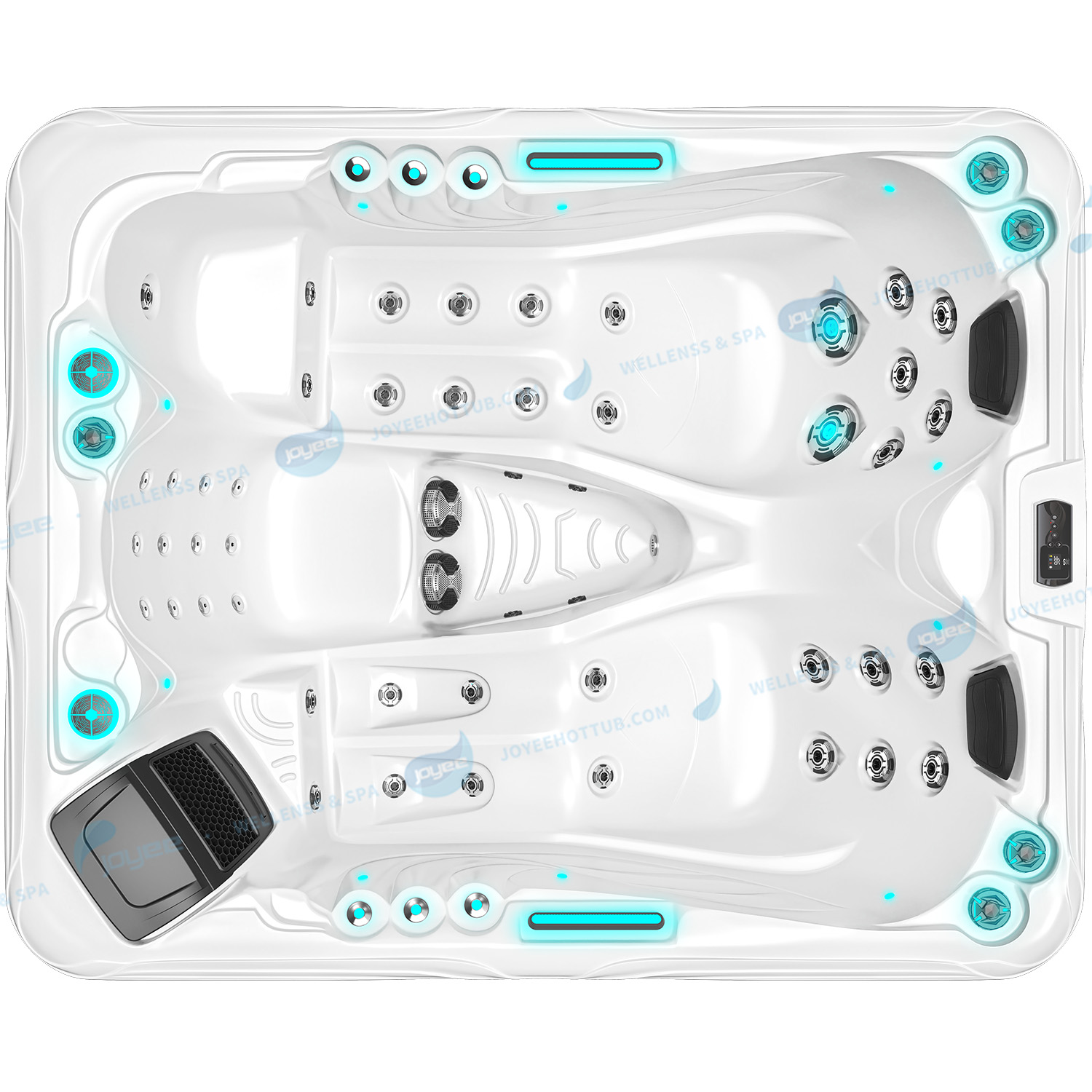
Off-the-shelf spas often feature generic jet layouts designed for mass appeal rather than targeted hydrotherapy. By commissioning a custom 3 person hot tub, property developers can specify precise jet types and placements. Different zones require different water dynamics. Deep tissue massage relies on large, directional jets positioned along the lumbar spine. Rotational jets provide a kneading sensation for the upper shoulders, while clustered micro-jets target the calves and feet.
Independent pump controls are critical. Guests have varying tolerances for water pressure. A customized system allows the occupant of the lounger seat to run their jets at maximum velocity while the guest in the adjacent upright seat enjoys a gentle, passive soak. Dedicated diverter valves and air-injection dials give users complete command over their hydrotherapy experience. You should specify a manifold plumbing system to ensure equal water pressure reaches every jet on the line, eliminating the weak flow often found at the end of daisy-chained plumbing runs.
A luxury amenity should never look like an afterthought. Working directly with an OEM hot tub manufacturer allows developers to harmonize the spa's appearance with the villa's architectural palette. Shell colors range from pure alpine white to textured slate gray or midnight marble. Cabinet finishes can be matched to existing deck stains, window trims, or hardscaping materials.
Lighting packages elevate the nighttime ambiance. Standard underwater bulbs are insufficient for luxury properties. Custom configurations include waterline LED perimeters, backlit waterfalls, and exterior cabinet sconces. These lighting systems enhance safety for guests entering the tub at night while creating a striking visual focal point in the garden. You can program these LEDs to remain on a static, warm white setting to avoid generating excessive light pollution that might disturb neighboring properties.
Placement dictates the visual flow of the outdoor space. Traditional above-ground installations are straightforward but can obstruct sightlines across the property. A semi-in-ground vaulting approach sinks the tub halfway into a custom deck or concrete patio. This lowers the profile, making the tub look like a permanent architectural fixture rather than a portable appliance.
Vaulting requires meticulous planning. The equipment bay must remain accessible. Sinking a tub without designing hidden access hatches is a catastrophic error. Technicians need at least 30 inches of clearance around the primary equipment panel to service pumps, heaters, and control boards. Proper drainage within the vault is also mandatory. You must install a French drain or an active sump pump system to prevent groundwater from flooding the electrical components during heavy rainfall.
Managing multiple properties requires centralized oversight. Modern control packs feature integrated Wi-Fi modules. These systems connect the spa directly to the property's router, allowing managers to monitor the unit via a smartphone application or desktop dashboard.
Remote fleet management eliminates blind spots. Managers can lock the temperature range, preventing guests from cranking the heat to unsafe levels. You can monitor filtration cycles to ensure water clarity and receive instant push notifications for error codes long before the next guest checks in. If a flow switch fails or the heater trips a high-limit sensor, you get an alert immediately. This proactive approach prevents negative reviews and reduces emergency service calls.
Electrical infrastructure dictates heating performance. Many entry-level tubs are marketed as plug-and-play, utilizing a standard 110V/15A outlet. These systems are entirely insufficient for luxury rentals. A 110V system cannot run the heater and the high-speed jets simultaneously. When guests turn on the jets, the water temperature plummets rapidly.
Commercial-grade installations require a dedicated 220V hardwired circuit, typically rated for 40 or 50 amps. This allows the 5.5kW heater to operate concurrently with multiple jet pumps. You must run 6/3 THHN copper wire through a rigid conduit from the main breaker to the spa location. Local electrical codes strictly govern these installations. A Ground Fault Circuit Interrupter (GFCI) disconnect panel must be installed in the line of sight of the tub, usually at least five feet away to prevent splash hazards. Always utilize a licensed electrician to ensure compliance and shield the property from liability.
Procurement is only half the battle; getting the unit into the backyard is often the most complex phase. Conduct a rigorous delivery path risk assessment before finalizing the order. Measure all gates, pathways, and overhead clearances. Account for the turning radius required to navigate corners with a 90-inch tall object tipped on its side. Check for low-hanging branches, utility lines, and gas meters that might obstruct the delivery crew.
If the delivery path is obstructed by narrow alleys, steep staircases, or structural overhangs, crane logistics become necessary. Boom trucks or specialized cranes can lift the unit directly over the villa and lower it onto the prepared pad. The rigging crew will use spreader bars and heavy-duty nylon straps to prevent damage to the acrylic shell during the lift. While craning adds to the installation budget, it prevents property damage and ensures safe positioning on elevated decks or enclosed courtyards.
Standard spa covers are the most vulnerable component in a rental environment. Constructed from basic EPS foam wrapped in marine-grade vinyl, they frequently suffer from waterlogging. Once saturated, a cover becomes impossibly heavy, loses its insulation value, and eventually collapses. Guests are notorious for sitting, standing, or walking on closed covers, leading to immediate structural failure.
Mitigate this risk by specifying advanced cover technologies. Extreme-load covers utilize vacuum-sealed, high-density foam reinforced with aluminum channels. These covers can support thousands of pounds, easily withstanding heavy snow loads and guest misuse. Furthermore, mandate the installation of automated or hydraulic cover lifters. Lifters guide the cover off the tub smoothly, preventing guests from dragging it across the concrete patio and tearing the vinyl. Install wind straps with locking hardware to secure the cover during severe weather.
Evaluating the financial viability of a wellness amenity requires looking far beyond the initial purchase price. Budget models present an attractive upfront figure but carry hidden operational penalties. Poor insulation leads to massive monthly electrical bills. Cheap rotomolded shells crack, and proprietary plumbing parts become impossible to source after two years.
Investing heavily in a commercial-grade unit yields superior long-term durability. High-density insulation, titanium heating elements, and standardized OEM components drastically reduce the five-year operational spend. Replacing a budget model every three years due to catastrophic failure disrupts bookings and destroys profitability. A well-engineered unit, properly maintained, delivers a decade of reliable service, ensuring the initial capital expenditure amortizes efficiently over thousands of guest stays.
Maintenance Task | Frequency | Action Required |
|---|---|---|
Water Chemistry Check | Between every guest | Test and adjust pH, alkalinity, and sanitizer levels. |
Filter Cleaning | Weekly | Remove pleated filters and spray with a high-pressure hose. |
Drain and Refill | Monthly (High Turnover) | Purge plumbing lines, drain water, scrub shell, and refill. |
Cover Inspection | Quarterly | Check for vinyl tears, waterlogging, and hardware integrity. |
System Diagnostics | Annually | Inspect pump seals, heater elements, and GFCI breakers. |
Private wellness amenities are proven revenue drivers. Industry data consistently shows that properties featuring high-end, private hot tubs command a significant premium over comparable properties lacking these features. The presence of a well-maintained spa directly elevates the Average Daily Rate (ADR).
Beyond the nightly rate, these amenities increase booking velocity and occupancy percentages, particularly during shoulder seasons and winter months. A premium spa transforms a summer-only destination into a year-round retreat. Guests actively filter search results on booking platforms for properties with private hot tubs. Properties without them remain entirely invisible to a large segment of high-paying travelers.
A warranty is only as valuable as the network supporting it. Standard residential warranties often contain clauses that void coverage if the unit is installed in a commercial or rental setting. You must secure a commercial-grade warranty explicitly tailored for high-turnover environments. Read the fine print to understand the distinction between parts coverage and labor coverage.
Evaluate the availability of local service technicians and the accessibility of OEM replacement parts. If a proprietary circuit board fails, waiting six weeks for a replacement part from overseas means six weeks of issuing refunds to angry guests. Partner with manufacturers who utilize universally recognized control systems and pumps. This ensures that any local pool and spa technician can source parts and execute repairs within 24 hours.
A custom 3-person hot tub represents a mathematically and operationally sound wellness investment for boutique villas. It delivers the intimate luxury guests demand while respecting the structural and spatial limitations of the property. By prioritizing commercial durability over residential gimmicks, property managers can elevate their ADR without inheriting an operational nightmare.
Success hinges on strict adherence to non-negotiables. Specify Aristech acrylic shells for chemical and UV resistance. Demand robust thermal insulation to control energy overhead. Integrate smart-control capabilities for remote fleet management. Compromising on any of these elements invites rapid degradation and guest dissatisfaction.
To move forward with your installation, execute the following steps:
Conduct a comprehensive site measurement to map the delivery path and determine if crane logistics are required.
Consult a licensed structural engineer to verify that your deck or patio can support a minimum continuous load of 85 PSF.
Engage a licensed electrician to install a dedicated 220V/50A GFCI circuit at the installation site.
Request technical specification sheets and commercial warranty documentation from vetted OEM manufacturers to begin the customization process.
A: A standard 3-person unit typically weighs between 2,000 and 2,500 pounds when filled with water and occupied by guests. This requires a structural support capacity of roughly 80 to 85 pounds per square foot (PSF) for deck installations.
A: An Aristech acrylic outdoor spa shell backed by multi-layer fiberglass provides the best longevity. Pair this with a galvanized steel or polymer frame and UV-resistant composite cabinetry for maximum durability against weather and high-turnover usage.
A: Yes, OEM manufacturers offer extensive customization for shell colors, cabinet materials, and lighting packages. This allows the unit to seamlessly integrate with your architectural aesthetics, whether installed above-ground or semi-in-ground.
A: On a dedicated 220V/50A connection powering a 5.5kW heater, a 200-gallon 3-person tub typically heats at a rate of 6 to 8 degrees Fahrenheit per hour, allowing for rapid temperature recovery between guest turnovers.
A: Luxury models require a dedicated 220V, 40-amp or 50-amp hardwired circuit. This must be connected to a GFCI disconnect panel installed by a licensed electrician to meet local safety codes and ensure simultaneous pump and heater operation.
A: Utilize automated ozone or UV-C sanitation systems to reduce chemical loads. Implement Wi-Fi remote monitoring for temperature and filtration cycles, enforce strict drain-and-fill schedules, and invest in extreme-load covers with hydraulic lifters to prevent physical damage.
